
Te KĀURU Harakeke Industry Framework
This framework is supported by a growing body of knowledge, research, and archival work exploring the harakeke industry in Aotearoa.
→ Explore the Harakeke Knowledge Archive at KimberleyMaaka.com
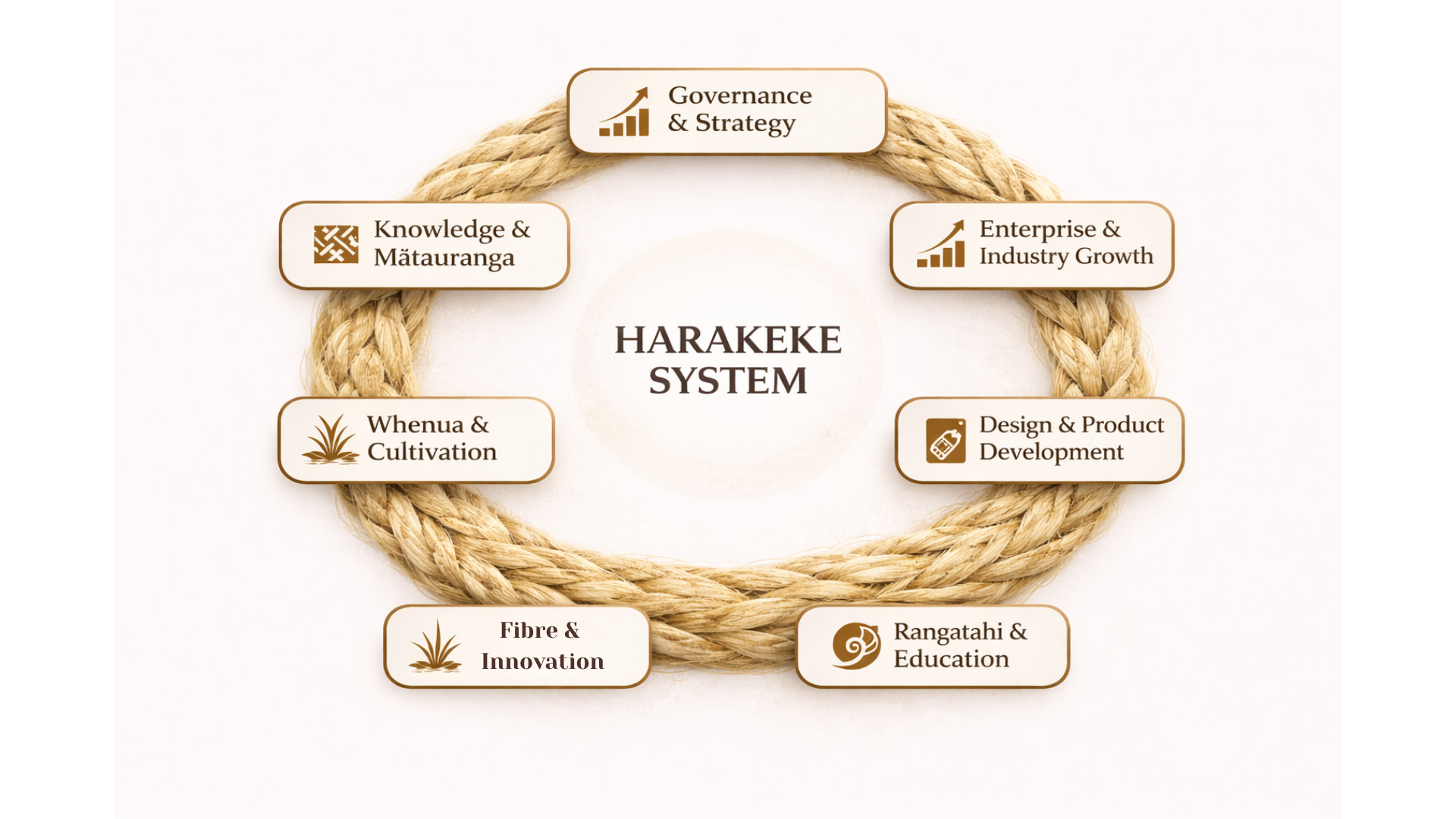
The Harakeke Industry Functions as an Interconnected System
Regenerating the harakeke industry in Aotearoa begins with bringing whenua, knowledge, people, and industry into alignment.
Whenua is the foundation.
Fibre, knowledge, and people activate the system.
Design and innovation shape its future.
Each pou is connected — working together to support a thriving harakeke ecosystem.
Strengthening one strengthens the whole.
Grounded in mātauranga Māori and supported by research, the Te KĀURU Harakeke Industry Framework guides a regenerative natural fibre economy.
The harakeke industry functions as an interconnected system. Each pou relies on the others. Strengthening one strengthens the whole.
THE FRAMEWORK
-
Harakeke begins with the land.
Strategic planting of harakeke across Aotearoa — particularly in flood-prone and underutilised land — supports biodiversity, erosion control, and long-term ecological restoration.
Understanding harakeke varieties and their optimal environments is supported by botanical knowledge from organisations such as the New Zealand Plant Conservation Network.
-
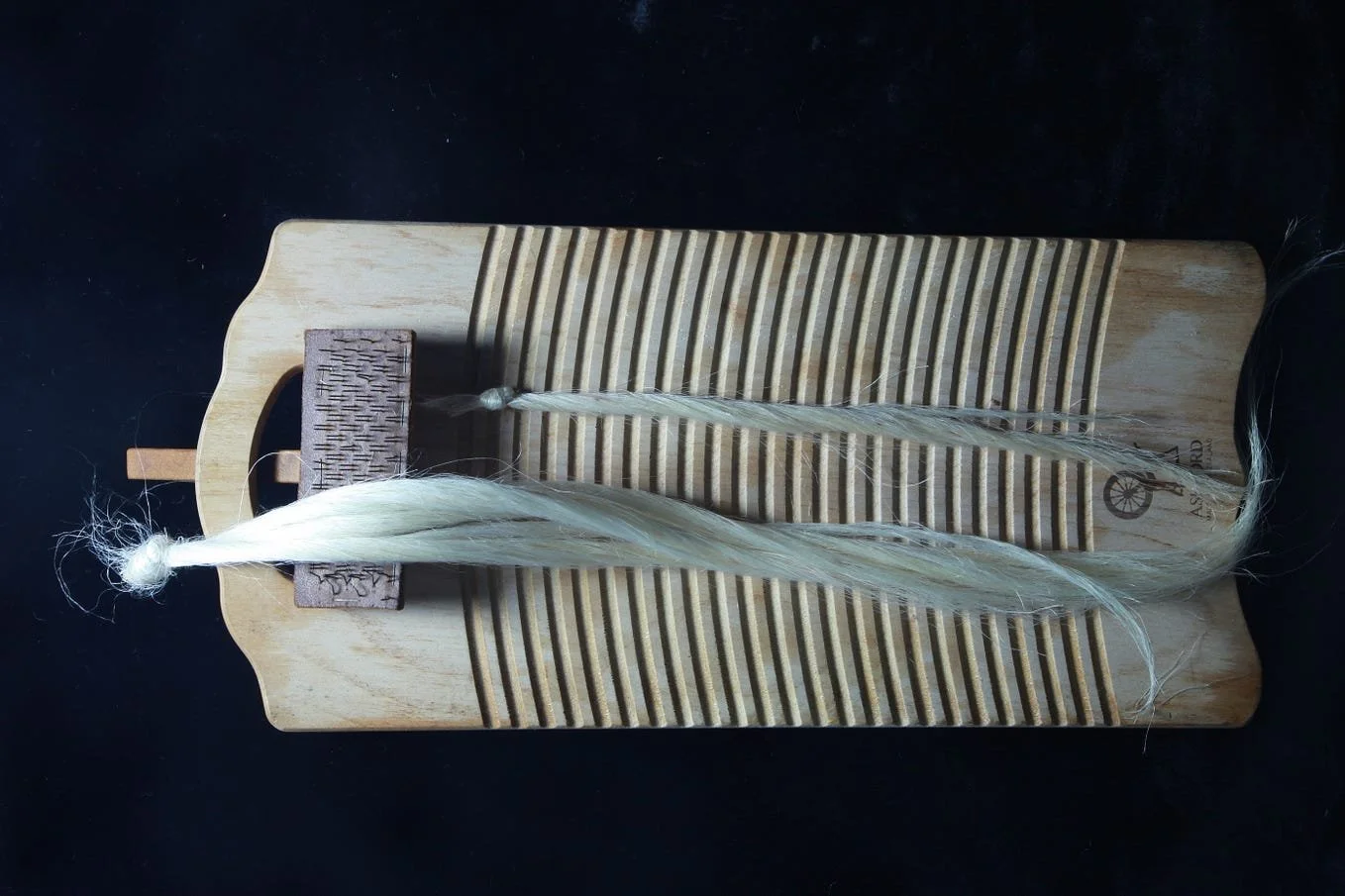
Transforming harakeke into usable fibre requires both traditional knowledge and modern innovation.
This includes harvesting practices, muka extraction, and the development of scalable solutions such as portable processing mills — enabling fibre production to occur closer to where harakeke is grown.
Historical flax milling practices and industry development are documented through Technology History New Zealand.
-
The transmission of knowledge is central to the survival and evolution of the harakeke industry.
This includes mātauranga Māori, weaving practices, fibre knowledge, and contemporary research. Contributions from knowledge holders and researchers, including René Orchiston, support the understanding of harakeke collection types and applications.
Through initiatives like Te KĀURU, this knowledge is shared with rangatahi and communities to ensure continuity.
-
A thriving harakeke industry is built by people.
Iwi, hapū, local communities, growers, and practitioners form the foundation of a workforce that is place-based, culturally grounded, and economically empowered.
This pillar supports job creation, skill development, and regional resilience.
-
Harakeke fibre holds significant potential for contemporary design and innovation.
From traditional weaving to modern applications in textiles, fashion, and material design, harakeke connects creativity with sustainability.
Designers, artists, and innovators play a key role in shaping how harakeke is experienced and valued in the world.
-
The long-term vision is the establishment of a regenerative, circular harakeke economy in Aotearoa.
This includes local production, national coordination, and global opportunities for natural fibre alternatives.
Renewed interest in harakeke’s role within sustainable systems is reflected in ongoing discussions and research highlighted by platforms such as Rural Delivery Magazine.
Research & Thesis
This framework is further informed by original research developed through my academic work, exploring the potential of harakeke as a contemporary fibre, cultural material, and future industry in Aotearoa.
My thesis investigates the intersection of mātauranga Māori, material innovation, and design — contributing to a growing body of work that repositions harakeke within both cultural and economic contexts.
This research forms part of the foundation for Te KĀURU and continues to guide the development of programmes, products, and industry pathways.

The regeneration of the harakeke industry is not a single initiative — it is a collective movement built across knowledge systems, communities, and generations.
The Te KĀURU Harakeke Industry Framework offers a pathway forward — one that honours the past, activates the present, and builds a resilient future.